The collection / Album · Deep House
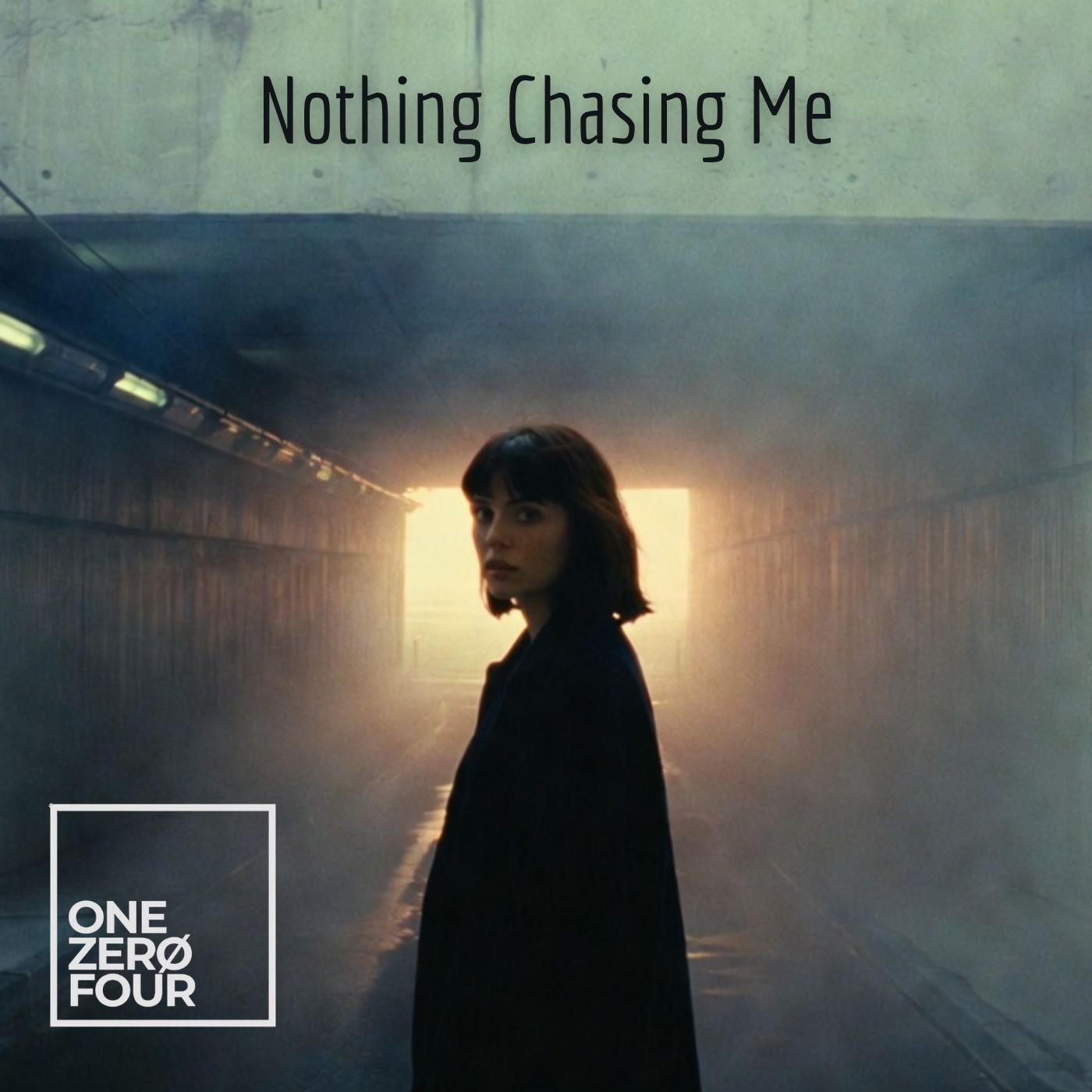
Nothing Chasing Me
- Released
- Mar 18, 2026
- Tracks
- 8 · 29:00
- Genre
- Deep House
Nothing Chasing Me is an eight-track journey through the psychological space between entrapment and freedom — not the moment of escape, but what happens before, during, and after. Built from counselling narratives, survivor accounts, and real-world patterns of coercive control, exploitation, and dependency, the record maps a quiet but profound shift: from living inside pressure to living inside your own time. This is not a story of confrontation. There is no dramatic break, no final speech. Instead, the album follows something more subtle — the gradual disappearance of control, and the slow return of autonomy.
Tracklist
-
01 Invisible Bars
95E minor04:33
Buy
A study in confinement without visible structure. Inspired by accounts of coercive control, this track sits in the space where something feels wrong but cannot be clearly named.
-
02 Permission
80B minor02:55
Buy
Inspired by narratives where care disguises surveillance, this track explores the shift from independence to conditional behaviour. Questions begin to shape actions. Autonomy becomes something negotiated.
-
03 The Bill With My Name
111C minor04:52
Buy
Drawing from stories of debt, dependency, and golden handcuffs, this track captures life lived in service to something that never resolves. Movement continues, but agency is gone.
-
04 The Door Didn't Slam
105F minor02:54
Buy
Inspired by survivor accounts where escape is anticlimactic, this track captures the moment of leaving — not as confrontation, but as absence. No chase. No consequence. No sound.
-
05 Nothing Chasing Me
84F major03:52
Buy
Inspired by post-escape narratives, this is the moment where calm feels unfamiliar. The body still expects interruption. The mind still scans for consequence.
-
06 Anger Came Late
100G# minor03:01
Buy
Based on recovery-stage experiences, this track reflects how anger often arrives after safety — not during harm. But this is not explosive anger. It is precise.
-
07 I Choose This
111G# minor03:20
Buy
This track marks the shift from reacting to choosing. Identity stabilises. Decisions are no longer shaped by past pressure, but by present intention. Choice becomes normal — not effort.
-
08 After the Exit
89G major03:32
Buy
Inspired by long-term recovery, this track moves beyond escape entirely. The past is no longer an active force. It exists — but it does not lead. There is no climax. No resolution statement. Only continuation.
Sleeve notes
Nothing Chasing Me: Inside the Making of an Album About Escape, Silence, and the Long Way Back to Yourself
There are albums about heartbreak, albums about anger, and albums about survival. Far fewer records attempt something quieter and more difficult: documenting the psychological terrain between entrapment and freedom.
The new eight-track release Nothing Chasing Me is built around that space --- the moment when a life lived under pressure begins to loosen, and what follows when the noise finally fades. It is not an album about confrontation or revenge. It is about something more subtle: the slow return of autonomy.
Musically, the record sits inside the broad lineage of cinematic downtempo and trip-hop, but it refuses the genre's usual mood of noir detachment. Instead, the music behaves almost like a narrative device. Early tracks are compressed, low-passed, and claustrophobic. By the end of the album the stereo field has opened, the drums have largely disappeared, and the songs seem to breathe.
The structure is deliberate. Each track represents a stage in a psychological arc drawn from survivor accounts, counselling narratives, and research into coercive relationships, workplace dependency, and forms of modern exploitation.
The album doesn't tell one story. It tells many overlapping ones.
The Research Behind the Record
The project began not with music, but with research.
Stories from counselling literature and survivor testimony often describe the same emotional pattern: control rarely arrives dramatically. Instead it builds slowly through routine, obligation, or dependency. In abusive relationships this may appear as surveillance disguised as care. In exploitative work structures it may manifest as financial obligation or lifestyle dependency. In modern slavery cases it can take the form of debt bondage, isolation, or document control.
Across these situations the experience shares a psychological signature:\ life continues, but choice gradually disappears.
Victims often struggle to describe what is wrong because there is no single moment of harm. The cage is invisible.
Another recurring theme in survivor narratives is that escape rarely feels cinematic. There is often no chase, no confrontation, no final argument. Instead the exit can be quiet and disorienting. Many survivors describe expecting punishment that never comes.
Freedom, in those early moments, can feel like silence.
The album's concept grew from this observation:\ what if a record followed that entire arc --- from compression to release --- without dramatizing it?
The result is an album that progresses less like a set of songs and more like a psychological landscape unfolding.
Sound as Narrative
From the beginning the production choices were designed to mirror the emotional trajectory.
The early tracks deliberately restrict the listener's space. Low-pass filtering removes brightness. The stereo image is narrow. Bass dominates. Cymbals are absent. Harmonic movement is minimal.
As the album progresses, these limitations begin to lift.
Drums loosen. Major tonal colours appear. The stereo field widens. Silence becomes part of the arrangement.
By the final track, the music is almost weightless.
The effect is subtle but intentional:\ the album itself slowly escapes.
Track-by-Track: The Journey
*Track 1 --- Invisible Bars***
The album opens inside the psychological architecture of control.
"Invisible Bars" explores the feeling of confinement that cannot easily be explained. The lyrics describe a world where behaviour has become measured and self-censored, even though no explicit rule is visible.
Musically, the track reflects this internal compression. The mix is narrow and heavily filtered. A slow half-time rhythm moves beneath a single minor harmonic centre. Bass occupies most of the sonic space, leaving little air.
The track never fully resolves, establishing the album's central tension:\ the listener can feel the pressure, even if its source remains unnamed.
*Track 2 --- Permission***
Where the first track depicts invisible restriction, "Permission" moves deeper into the logic of control.
This song examines the subtle shift where surveillance becomes normalized. Questions that appear caring --- Where are you? When will you be home? --- slowly reshape behaviour.
The music reflects this tightening environment through clipped rhythms and small percussive ticks that resemble mechanical monitoring. Harmony loops repeatedly without development, reinforcing the feeling of behavioural repetition.
By this stage of the album the subject has not yet recognized the trap. The system feels normal.
*Track 3 --- The Bill With My Name***
The third track explores a different form of entrapment: obligation.
This influence comes from stories of financial dependency, debt, and so-called "golden handcuffs" --- situations where the structures that sustain a life also prevent it from changing.
Here the lyrics describe existence as a series of transactions. Each day pays down a cost that never quite disappears.
The music mirrors this endless cycle. Dub-influenced bass pulses beneath a mechanical drum loop, while small industrial textures suggest systems operating in the background.
The track moves forward constantly, yet nothing truly changes.
*Track 4 --- The Door Didn't Slam***
At the centre of the album sits the quietest moment.
"The Door Didn't Slam" represents the act of leaving.
What makes the moment powerful is what does not happen. No confrontation. No pursuit. No dramatic escape.
The music expresses this absence by removing the elements that previously defined the record. Sub-bass disappears. Drums nearly vanish. Reverb opens the soundstage for the first time.
Instead of intensity, the listener hears air.
It is the first moment on the album where silence becomes a presence rather than a threat.
*Track 5 --- Nothing Chasing Me***
The title track captures the psychological shock that follows escape.
Survivor accounts often describe the early days of freedom as strangely disorienting. The nervous system remains alert long after the threat has gone.
In the song's narrative, the subject waits for consequences that never arrive.
Musically the track introduces warmth for the first time. Brushed drums, gentle harmonic colour, and a broader stereo image create a sense of space that earlier songs denied.
But the calm remains tentative. The quiet still feels unfamiliar.
*Track 6 --- Anger Came Late***
Recovery rarely follows the emotional order we expect.
Many survivors report that anger does not appear during the harmful situation itself. Instead it arrives later --- once safety allows it.
"Anger Came Late" explores that moment. The lyrics treat anger not as destruction but as alignment: the rediscovery of boundaries.
The track's rhythm becomes more assertive, built around a tight breakbeat and spoken delivery that carries authority without raising its voice.
This is the first time on the album where the music feels directed rather than reactive.
*Track 7 --- I Choose This***
If the earlier songs focus on escape, "I Choose This" is about authorship.
The subject of the album no longer defines themselves by what they left behind. Instead, choice itself becomes the centre of gravity.
Musically the track introduces the album's most forward-moving groove. A brighter harmonic palette and melodic bassline create momentum without tipping into celebration.
The message is simple but powerful: freedom is not a moment. It is a practice.
*Track 8 --- After the Exit***
The final track refuses the traditional emotional climax.
There is no triumphant ending, no statement of victory. Instead the album concludes with integration --- the quiet acceptance that life continues.
The arrangement is sparse: open harmonic intervals, distant piano resonance, and long decaying textures. Drums barely appear until the closing moments, when a faint rhythmic pulse returns.
The lyrics speak of something rare in narratives of trauma: peace without explanation.
The past exists, but it no longer leads.
The Underlying Message
The central message of Nothing Chasing Me is deceptively simple.
Freedom is rarely loud.
Popular culture often portrays escape as a moment of confrontation --- a door slammed, a final speech, a decisive break. But many real stories are far quieter.
Sometimes freedom arrives as the absence of something:\ no voice raised, no demand made, no footsteps behind you.
The album invites listeners to sit inside that silence.
By the time the final track fades, the music has gradually shed the sonic markers of confinement that defined the opening. The transformation is subtle enough that many listeners may not notice it consciously --- but they feel it.
The record begins in compression and ends in air.
The Long Way Out
In the end, Nothing Chasing Me is not really about trauma at all. It is about the long and often invisible process of reclaiming agency.
The journey it describes does not end in triumph. It ends in something far more radical:
the ability to live a day that belongs entirely to you.
And sometimes that is the quietest revolution of all.